
February 23, 2026
Re: "Part 3: Erich Przywara's THE MYSTERY OF KIERKEGAARD: Chapter 2: "The Question at Issue"

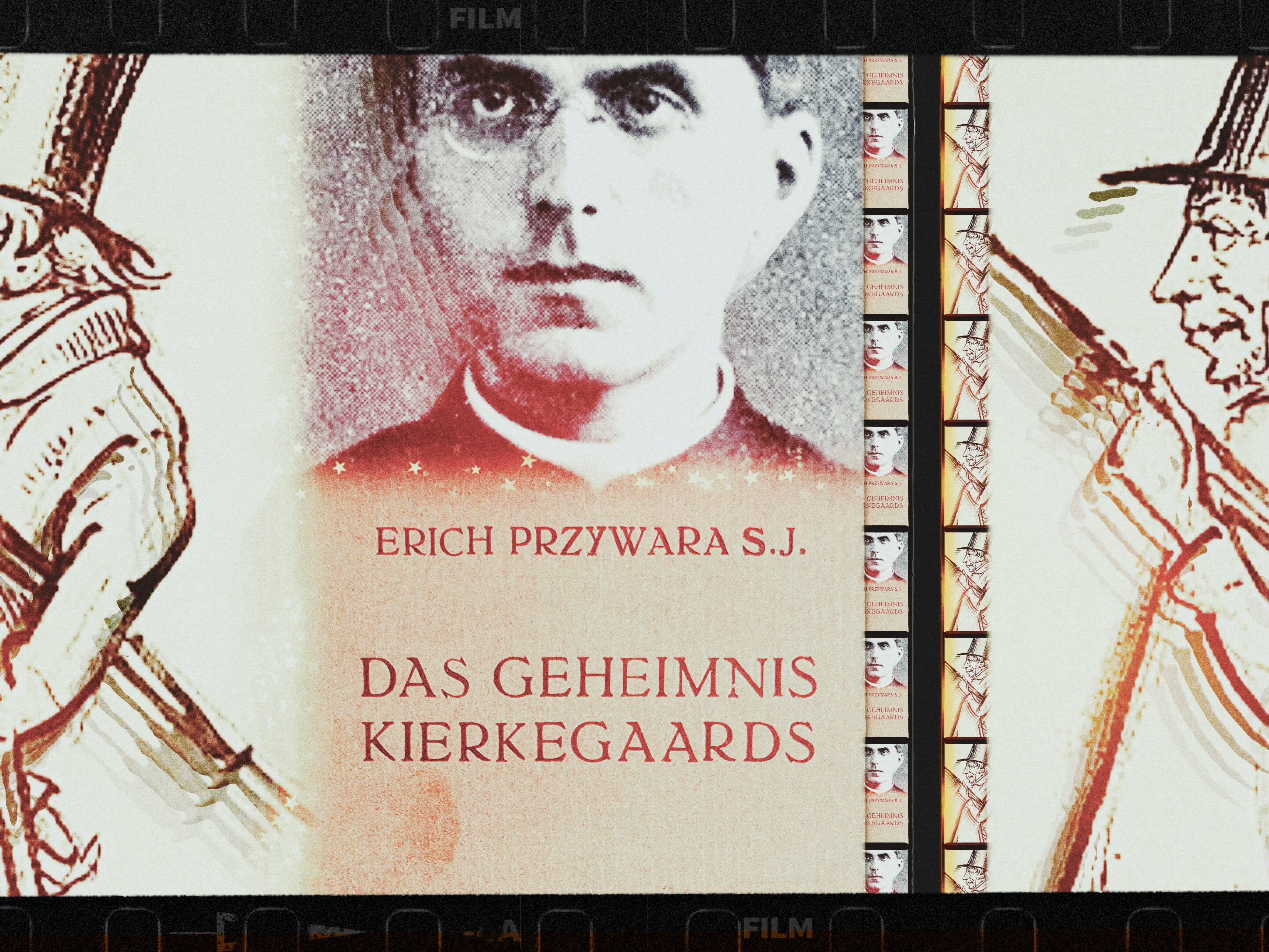
This is the third part of a series that, as I wrote in July, I plan to slowly unfold over the next couple of years. In the late 2000s, when I was finishing my doctorate at the University of Oxford, I started translating The Mystery of Kierkegaard (Das Geheimnis Kierkegaards) by the Prussian Catholic thinker Erich Przywara, S.J. In time, I would use this side project as the basis for a proper book chapter—namely, “Erich Przywara: Catholicism’s Great Expositor of the ‘Mystery’ of Kierkegaard,” which was published in the 2012 book Kierkegaard’s Influence on Theology: Catholic and Jewish Theology (Volume 10, Tome III).
In my most recent post in this series (linked below), I presented “The Problem of Style” (Das Stil-Problem), the opening chapter of the book’s first major division, which Przywara simply entitles “Mystery of Style” (Geheimnis des Stils).

Today’s post presents the second chapter of “Mystery of Style,” which bears the equally pithy title “The Question at Issue” (Das Frage-Problem). Arguably the key concept in “The Question at Issue” is Przywara’s category of “the between” (das Zwischen), which builds off the problematic of “ambiguity” (Doppeldeutigkeit) that Przywara develops in the prior chapter. According to Przywara, Kierkegaard’s use of pseudonymous voices and conceptual irony marks him as a stylistically ambiguous writer, whose task to give form to the manifoldness of human existence.
In the present chapter, Przywara deepens this analysis by attending to Kierkegaard’s own person. For some commentators, the Dane is nothing more than an aesthetic genius, whose melancholy drove him to dialectically entertain, but never existentially assume, a determinate worldview. He is, on this reading, a psychologist of “the between.” But Przywara concludes by tendering an alternative possibility. What if the psycho-spiritual “betweenness” that marks Kierkegaard’s authorship indicates a personal attempt to force his way through to a higher reality? What if the darkness or “night” of his literary output reflects a longing for—perhaps even an intuition of—a light against which the darkness shall not prevail? What if, in short, Kierkegaard was not a psychologist but a kind of mystic?
Mystery of Style
2. The Question at Issue
With that, however, we have landed on the either-or that makes up the question at issue in Kierkegaard. It lies, at its sharpest, in the word that emotionally pervades everything in Kierkegaard’s thinking: melancholy (Schwermut).
Is melancholy, as Vetter maintains, perhaps the most powerful case of psychoanalytic sublimation? Is Kierkegaard’s religiousness the clearest symbolic language of eros? Is “melancholy,” therefore, a demonic melancholy in Kierkegaard’s negative sense, where, for him, there is indeed a correspondence between the demonic and music’s “actual genius of the sensory life” (TG I, 93)?
Or is it “melancholy” in a different sense — as R.H. Sorge writes of his own mystical experience of the “night of God”: “Frightful melancholy encloses me” (Gericht über Zarathustra 25)? Is it the last mystery of “the blessedness of those who mourn,” the mystery that, in a sign of the melancholy of love, John of the Cross himself metaphorically calls (in “El Pastorcico”) “del Amor muy lastimado” and “por…amor…lastimado,” “out of gloomy love”? Is it therefore meant in the deepest sense of Kierkegaard’s own short phrase, “religion is melancholy” (cf. at length TG II, 39), in the strongest performance of the “periissem, nisi periissem” as a “motto of my life” (TG I, 384)?1 As a consequence, has the “night of God” in the mystical tradition of the Church Fathers become the path of interpretation towards that which Kierkegaard himself, at the most mysterious point in his journals, calls “the night of the absolute”?
The human being has a natural horror to go into the dark—no wonder then that he, naturally, is terrified before the absolute, to get involved with the absolute, of whom it holds true that no night and “no darkness is half as black” as this darkness and this night, where all relative aims (the general milestones and signposts), where all purposes (the lanterns by which our way is normally illuminated), where even the most delicate and innermost feelings regarding conditions—are extinguished, because otherwise it is not absolutely the absolute (TG II, 339).
But must this be read in light of the earlier passage: “When, in the hour of death, it grows dark before a genuine Christian, that’s because the sunlight of blessedness is too strong for his eyes” (TG I, 101)?
As the above shows, Kierkegaard treats melancholy and night along the same lines as sacrifice, suffering, and death—though sacrifice and suffering and death represent the apex of passion. For Kierkegaard, these three words most strongly express what is central: melancholy and passion, and death as the form that gives them meaning. This leads our question further. Much as the ultimate element in Freud’s psychoanalysis is the death-wish, does Kierkegaard’s concept of death arise from melancholy-passion in the sense of a passion broken and inhibited and poisoned by melancholy? Or is it passion in the sense of John of the Cross’ llama de amor viva, which first rests in the muerta en vida, the holy passion that has its life in death? This would, therefore, correspond to Kierkegaard’s last journal entry: “Spirit is: to live as if dead (to die to something)” (TG II, 405).
There remains a final possibility of expression. As an explanation of the deepest religious dimension, the psychoanalytic interpretation here uses the same, utterly abstract codeword—namely, “id” (Es)—to grasp the signified phenomenon more clearly. Freud’s death-melancholy presents its metaphysical principle, so to speak, in the following way: because the “I” did not become lord of the “id”—that is, because it confusingly and unsuccessfully resisted the objective order of the drive, to which the “id” wants to succumb as a dark destiny. The downfall of eros—the impersonal id against which the ego drive struggled but failed—takes on the face of death: love and death are Janus-faced.
At the same time, it is also characteristic of the mystic in the state of “the night” to declare the love of his heart, his God in impersonal fashion: as a “vast desert,” as an “abyss” (Abgrund), as “darkness,” as the “night’s primordial source.” This is true to the extent that the German mysticism audaciously spoke of sinking down through the personal “God” into the “infinite vastness” of the “Godhead.”
In its paradoxicalness, which borders on frivolity, there is no doubt that the question that thereby reaches its apex is almost unbearable. But in this regard it corresponds precisely with Kierkegaard’s peculiar genius: the either–or that became his hallmark (TG II, 304) grasps the outermost extremes of the poles. And, objectively, it is in fact the shocking ambiguity of the word “love” itself (in keeping with Kierkegaard’s intention to restore all words from the dullness of their everyday use to the white-hot intensity of their original meaning, from their habitual facility to the extraordinary “leap” of their emergence) — thereby “love,” which at the same time stands for “desire” (Trieb) and for “God is love,” — indeed, not only that, because after all the word “desire” still points to both extreme poles as well, — “desire” as an existential drive (Getriebensein) of eros and as an existential drive in the sense of the Augustinian agi per Deum.2 It is that great riddle of life, well understood by the most significant teachers of asceticism and mysticism when they were unable to set up sufficient “rules of discernment” for the mystical states of mysticism and eros. — So what is it then: does the character of an impersonal existential drive, which Kierkegaard’s life and authorship unmistakably betray, point to the id of Freud or to John of the Cross?
However, in keeping with what we had to establish at the outset about Kierkegaard’s underlying ambiguity, a “no” must slice through the relative “yes” of this problem: is Kierkegaard, in the end, perhaps not at all “one or the other,“ but rather their unsolved and unclear between? Would not the following scattered comments—which speak of such a final, inexplicable indeterminacy, with explicit or implicit references to the question of one’s life and work—correspond to this conclusion? Kierkegaard writes of the “misfortune of my existence” in which “my interests are not particularly subordinated, but all are coordinated” (TG I, 22); — the “Romantic” lying therein, “that the two halves of an idea become distinguished through something alien lying in between” (ibid. 47); — the “Romantic in brokenness,” but consisting in this, “that it has conjured up an unfulfilled urge, but without finding its fulfillment therein” (ibid. 48).
In other words: we have arrived at the question to which the bulk of Christoph Schrempf’s passionate reckoning with Kierkegaard brings us. Is the whole problematic that we have hitherto unpacked basically nothing more than a pretext for Kierkegaard’s writings? Does Kierkegaard at all want a relation to realities of the sort implied in the two possibilities that, again and again, we set in opposition above? Or is everything, for him, only “authorial material’,” a movement that he breaks off shortly before it would flow into actual realization, in order to render it fruitful in the purely literary sphere—so that the interweaving of an aesthetic and religious stance of which Kierkegaard himself speaks would not mean, as he would have it, that even the earliest aesthetic-erotic writings are governed by the religious (TG I, 395), but rather, on the contrary, a continued domination, even over the final religious writings, of the peculiar distance from practical decision that is characteristic of the aesthetic?
One will have to grant, then, that there is no small amount to be said for the possibility of Schrempf’s suggestion. He speaks of the peculiar way that Kierkegaard centers on the intellectual: understanding and not understanding (TG I, 46, 47/48; GW VI, 23, 31); — his dream of a “clear, decisive, passionate understanding” as a relief from action (ibid. 420/1); — the notion that “every thought is to be thought down to the smallest” and “then thinking is to mean nothing other than to think” as a longed-for eternal life (ibid. 382-3). In addition, his express authorial mentality speaks to this: the idea that “the entire life of a person…can be seen as a great dialogue” “in which different persons represent different speaking parts” (TG I, 46); — the comment that “I only feel good when I’m producing” (ibid. 310) up to the overcoming of melancholy through the destiny of being a writer (ibid. II, 135f.).
It also could be said that he himself designates “armed neutrality” as his standpoint (ibid. I, 112) and, with it, a fundamental distance; that he further speaks of “intellectual elegance” (ibid. II, 149) as his “essence,” so that one could be quite tempted to see every point along the “stages on life’s way” as a self-confession, where he denotes the “psychological” as “the last border between the aesthetic and the religious” (GW IV, 413ff); therefore that which constitutes the particular nature of his entire authorship—the tremendously penetrating psychology as a between (ein Zwischen) in which the aesthetic is not quite aesthetic but also still not practical religion. This would also finally accord with what he himself says about himself:: “What I was missing was to lead a complete human life, and not only one of knowledge” (TG I, 30). And that is why he can jot down the following pointed statement: “What ability there is in an individual may be measured by the yardstick of how far there is between his understanding and his will. What a person can understand he must also be able to force himself to will. Between understanding and willing lie excuses and lies” (ibid. 247).
But precisely these last remarks illuminate our question in a different way. As these sentences show, if one so relentlessly sees the doom of being nothing more than a writer, then his distance from actuality is at least not a static distance but a strained and struggling on-the-way (Auf-dem-Wege) towards actuality. Further: if, as is necessary, we examine the whole of these references with an eye to the background of the entire development of our first part, then taking Schrempf’s possibility in dialectical fashion also follows as a matter of course—that is, to set its opposite over against it as a possibility. This opposite would be that the uncertain “between” of Kierkegaard (between a decisive erotic standpoint and a decisive God-standpoint) also could be a between that is not a personal intention but a mysterious act of providence (Schickung), not a refusal to keep going but a mystery of governance (TG II, 296), which Kierkegaard speaks about even in connection to his writings: to write “with a directed pen” (TG I, 134).
Therefore our second question must be: if the mystery of Kierkegaard consists in an undecidable between, then is this between one that in the highest degree lies on the side of Kierkegaard himself? Is it a between of the writer who receives aesthetic pleasure yet remains fixed in the uncommitted realm of pure representation (as Schrempf has it), — or is it a between that mysteriously confronts the one who is opening up to actuality, just when he thinks he has it within his grasp. This is, in short, the situation that is expressed in the deeply distressing journal entry that gives a presentiment of his broken engagement with Regine Olsen: “Will I find what I am seeking here in this world? Will I experience the conclusion of all my life’s eccentric premises? Will I fold you in my arms? Or: Have you gone on ahead—you, my longing, do you beckon to me, transfigured, from another world?” (TG I, 125).
Because of that, however, it is clear how this second question—despite or perhaps in opposition to the first—becomes a sharper version of the first. For the aesthetic principle of “pleasure alone” is the entire concrete form in which the psychoanalytic explanation views Kierkegaard’s life—namely, as the erotic narcissism of self-indulgence in all things (Vetter 122ff, 167, 183, 289). Yet, the between of a being restrained “from above” would be the clearest form in which earth, humanity, and one’s own life more and more resemble a “night” wherein all realities turn into intangible shadows. This is the true between of the night, which is no longer a day on earth and still not a day in heaven—the night in which earth, humanity, and one’s own life slip away from the one who walks and acts, rather than resting in a firm, governing hand, and in which all change and activity tends rather towards a painful push and being pushed than towards ever-increasing success.
Hence, on the one hand, this condition corresponds almost word-for-word to what Kierkegaard’s journals describe in stammering fashion—he himself not fully understanding it—but which on the other hand compellingly reminds one of what the mystics say or, at least, are able to intimate of the “night.” The otherwise dominant motif of understanding and comprehension in Kierkegaard’s writings would thus receive an explanation altogether different than the one Schrempf and Vetter wish to give it, because they have no eye for the mysteries of inner religious life (or, for some reason, they harshly refuse to see it). In the journals of Kierkegaard’s last years, the process of “mortification” (Absterben) peculiarly grows as a sign of the love of God (TG II, 291ff., 294ff., etc.). This mortification indicates patience in the hardest sense, from God’s removal of the “thorn in the flesh” (TG II, 296) up to the ever-renewed recurrence of that reflection on Christ’s cry, “God, my God, why have you forsaken me!” (TG II, 333, 340, 364), which had already begun in For Self-Examination: Recommended to the Present Age (GW XI).
This intensification continues up to a participation in Christ’s God-forsakenness—a treatment that, in the journals, nevertheless remains reverently and timidly aware of the distance between the Christian and the God-man (TG II, 340). Would it, then, be entirely out of the question to illuminate this by way of Saint John of the Cross’ mysterious night-mysticism (Nachtmystik), which Jean Baruzi sees precisely in the mystical participation in Christ’s God-forsakenness on the cross as the height of the “anéantissement de tout notre être”?3 Is it not a night of a mysterious awareness of not being understood by God and the not-understanding of God?
It should be noted that we are not putting forward the hypothesis that Kierkegaard should be seen as a mystic. What is at issue is to show that the question only then becomes sufficiently broad and unprejudiced when it is posed in the spirit of Kierkegaard’s “radical Christianity” (TG I, 38, 41). Moreover, by driving the tension between opposing poles to the utmost, it still leaves room for the proximity of a possibility—just as a comparison of Kierkegaard’s language with the hymns of the Doctor of the Night would seem to force upon us.
Periissem, nisi periissem is a Latin phrase meaning “I would have perished, had I not perished.” Here Przywara is referring to an 1848 journal entry, in which Kierkegaard writes: “Periissem, nisi periissem still is and will be my life motto. This is why I have been able to endure what long since would have killed someone else who was not dead” (SKS 20, NB5:45).
In English this Latin phrase could be rendered “to be moved by God.” Here Przywara seems to be making a general reference to the theology of Saint Augustine, though agi per Deum bears a conceptual resemblance to one of the most famous passages in Augustine’s Confessions: Interior intimo meo (“You are more inward to me than my innermost”).
This phrase can be translated as “annihilation of our entire being.” In a footnote, Przywara provides the following two references: Jean Baruzi, Saint Jean de la Croix (Paris 1924), 566. Cf. Przywara, Ringen der Gegenwart (Augsburg 1929), I, 483ff.